
01
CONNECT EVERYTHING
Your ERP, your subledgers, your budget files, your operational systems. Truzer reads them through read-only connectors in hours. No rip-and-replace. No IT ticket queue.
Traditional GL reports are rigid, slow, and require endless Excel exports. Truzer turns your entire General Ledger into a living, interactive visual ontology, so you can navigate from high-level groups down to monthly actuals vs. budget in seconds, spot variances immediately, and get clear AI explanations.

Craig and Michael have spent 10+ years aggregating the complex for 1,000+ organizations. They watched Controllers chase reconciliation drift, FP&A managers rebuild monster models every month, and CFOs walk into board meetings unable to defend a variance they could not drill into. Truzer.ai is what they built so finance teams stop hunting through static reports and start navigating the general ledger like an ontology.
Book a Founder Call



Summit Dynamics, a mid-market manufacturing company. Four operators. One general ledger. One ontology.
The ultimate architect of capital allocation and the board narrative. When a board member texts him about a gross margin contraction, he needs an immediate, infallible answer. Success for Ryan is radical autonomy.
Truzer AI Assistant. Your always-on finance co-pilot.
PROBLEM → OUTCOME
The ledger holds every answer. The interface around it hides them.
Every close, finance exports the GL, rebuilds the chart of accounts in a spreadsheet, and prays the formulas hold. The ledger updates. The spreadsheet does not. Any change to the chart of accounts shatters the model.
The dashboard names the overage. It cannot name the vendor, the cost center, or the transaction memo behind it. So the question gets thrown back to finance. And the answer arrives in a thread of emails, hours after it mattered.
Subledger balances refuse to match. Manual journal entries lack traceable support. The reconciliation file shows a variance the team cannot explain. So the file gets redesigned. Again. And the close stretches another day.
In just five clicks and two quick conversations with Lazer, Ryan goes from “I need to check the budget” to full visibility, clear explanations, and ready-to-share insights.
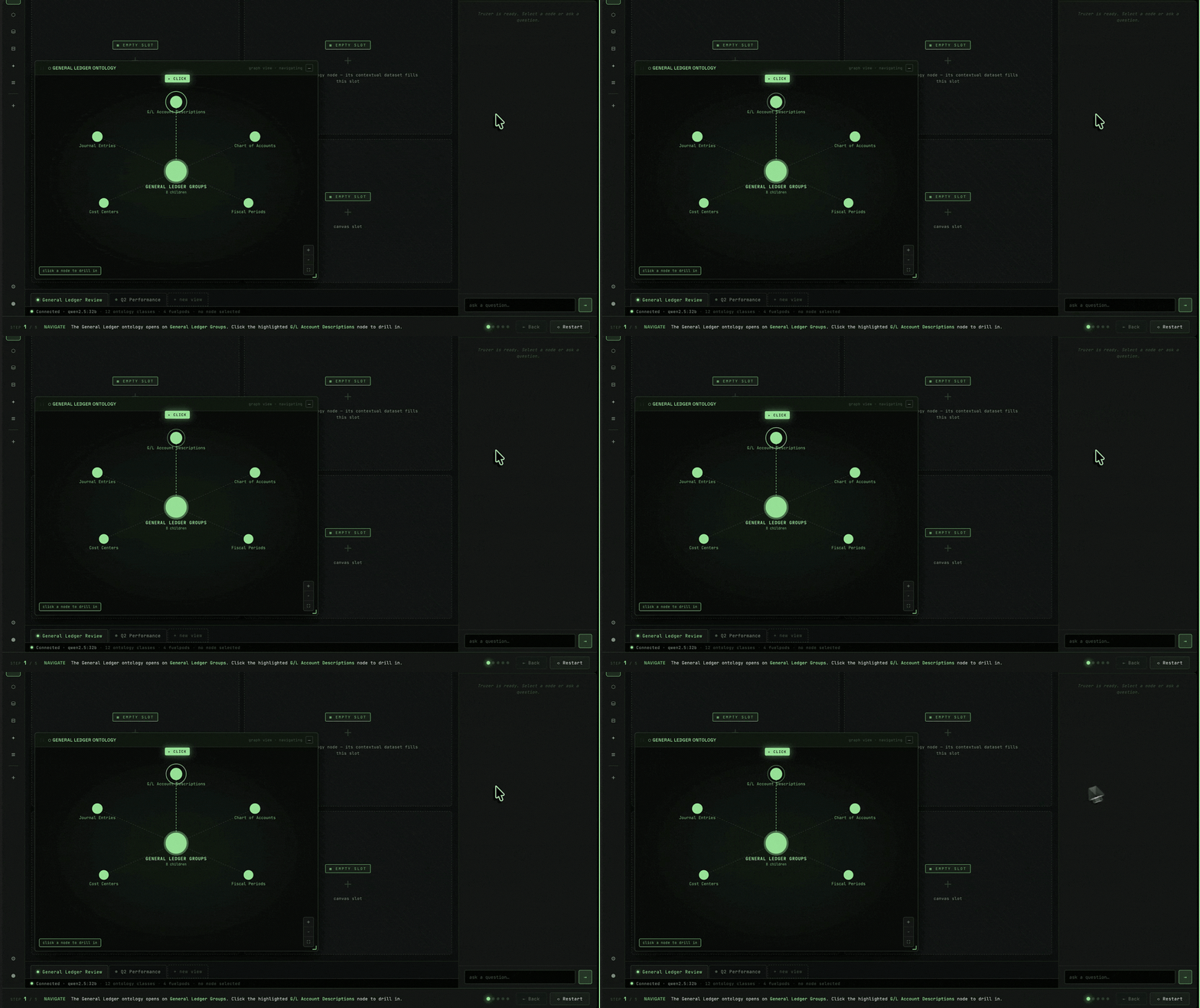
Ryan opens Truzer and lands on the live General Ledger Ontology. He clicks the top-level General Ledger Groups node. It expands instantly into General Ledger Account Descriptions. One more click reveals Actuals, Budget, and Monthly Breakdowns in a clean hierarchical view.
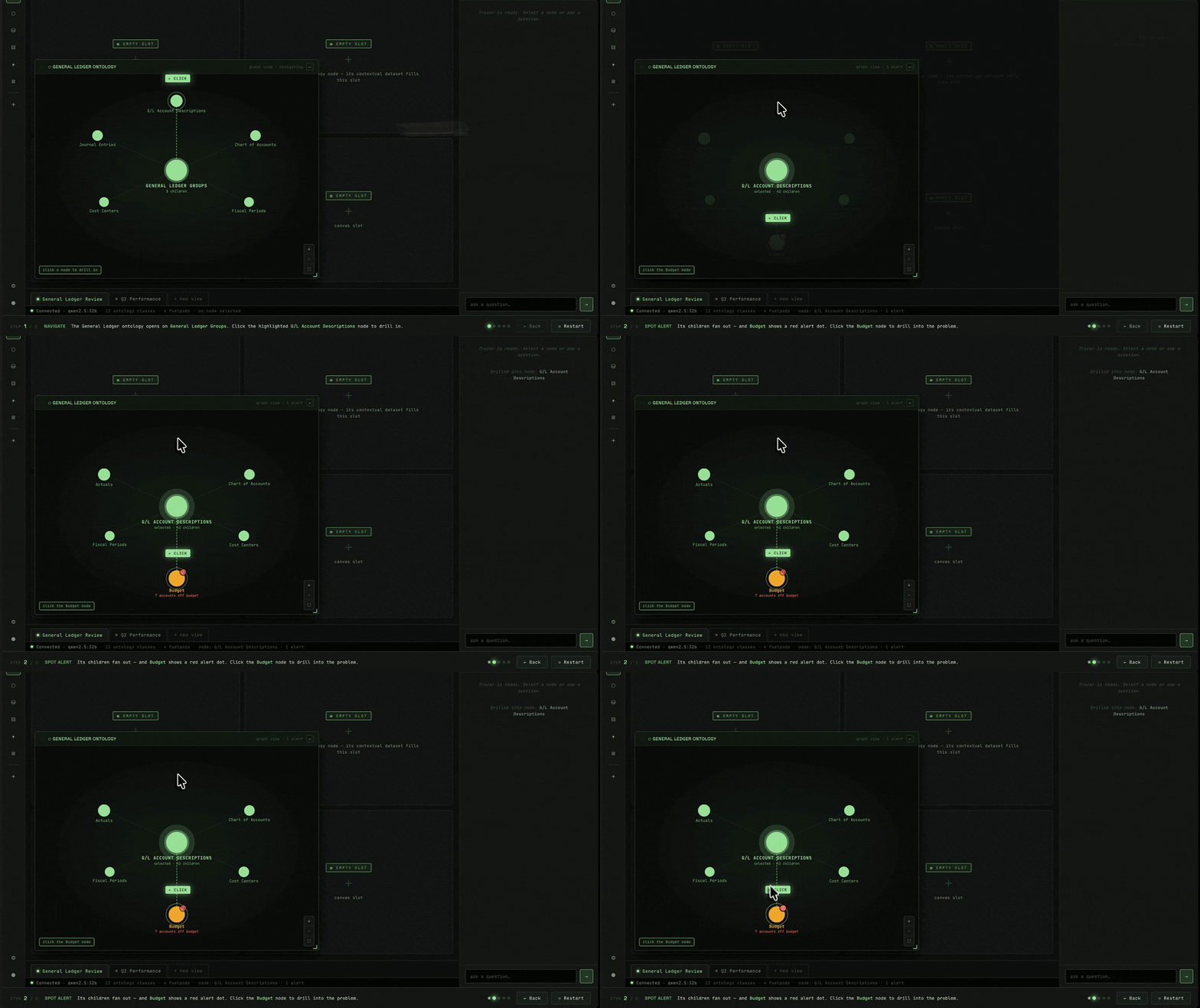
As he explores, Ryan notices a red alert badge on the Budget node. He clicks it.
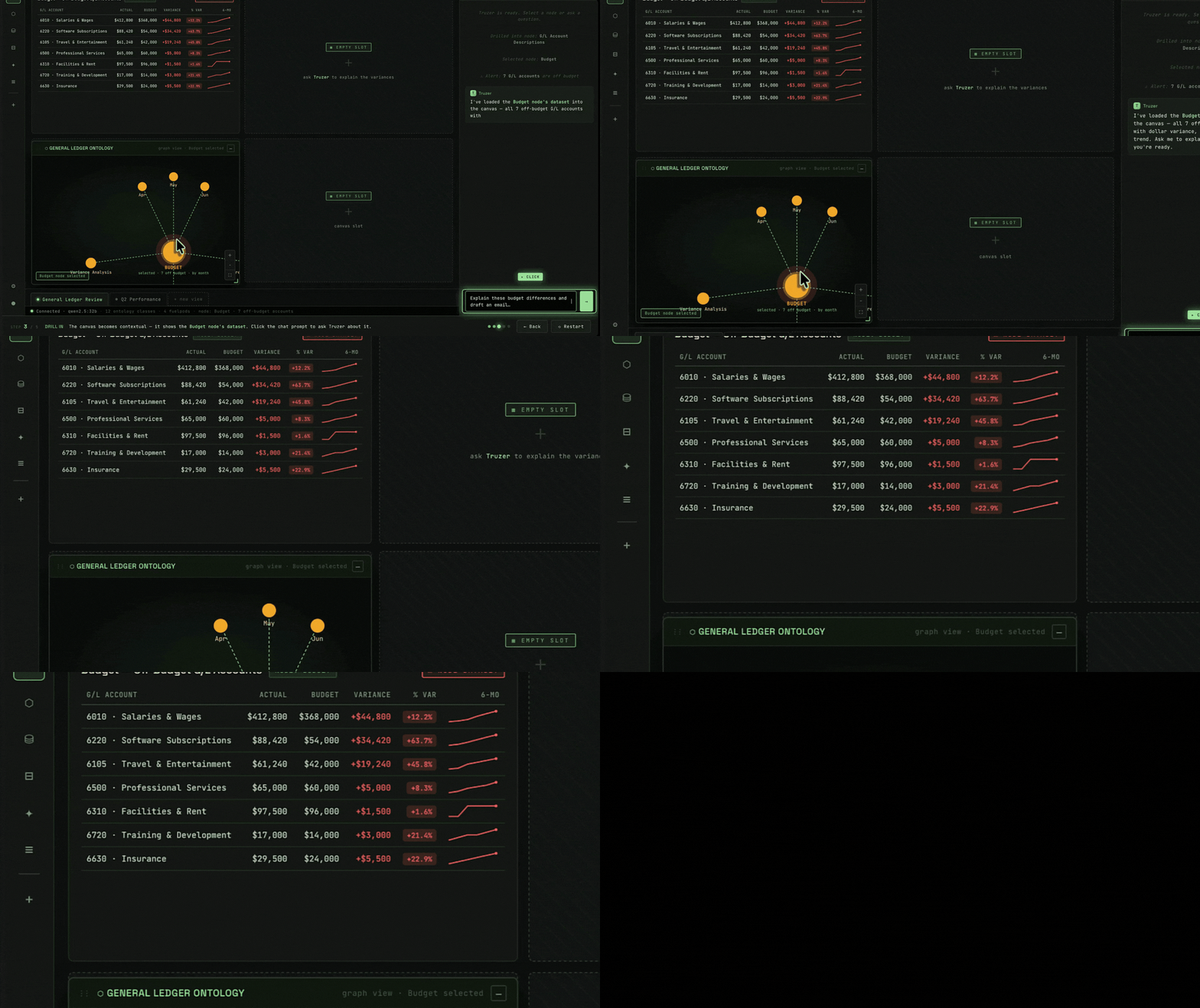
The main canvas updates instantly with a clean, sortable table showing all GL accounts that are off budget, including exact dollar variance, percentage variance, and 6-month trend sparklines. Everything is color-coded for instant recognition.

“Explain these budget differences and draft an email to the finance team with recommended actions.”
Lazer instantly provides a clear summary of the root causes and suggests three prioritized actions. It also drafts a professional email that Ryan can review, tweak, and send directly from Truzer.
Ryan continues in the chat:
“Create a profit and loss statement comparing actuals to budget so I can see the full impact of these variances at the aggregated level.”
Lazer instantly generates a clean P&L statement with variance columns and highlights the material budget impacts.
is the average time mid-market finance teams spend on month-end close, against a top-quartile benchmark of 1–2 days. The gap lives between the ledger and the spreadsheet. The ontology closes it.
APQC, Cross-Industry Open Standards Benchmarking — Finance Close Cycle Time, 2024
The ontology IS your general ledger. Every variance, every actual, every transaction, one navigable surface.
GL drill-down
Variance explanation
COA change impact
Tie-out integrity
Board package speed
Deployment
Commitment
One side keeps you guessing in the next board meeting. The other one tells you the truth in 60 seconds.
Every Controller we have worked with had the same starting state: a GL that worked, surrounded by tools that did not. Here is how Truzer fixes the surround.
Your ERP, your subledgers, your budget files, your operational systems. Truzer reads them through read-only connectors in hours. No rip-and-replace. No IT ticket queue.
Truzer builds a living, interactive visual ontology of your general ledger. Every group, every account, every dimensional context, visualized as one navigable surface.
Click any node. Truzer surfaces the underlying journal entries, the variance drivers, the six-month trend, the source invoice. Drill from the board number to the transaction in seconds.
Truzer's Lazer AI explains the variance, drafts the team email, and generates the comparative P&L. Grounded in your ledger. Auditable end to end.
Truzer reads from the systems you already run. No data migration. No ERP swap. No 18-month rollout.
Plug Truzer into NetSuite, Sage Intacct, SAP, Workday, Dynamics 365, QuickBooks, or Xero. The ontology starts building the moment the connection is live.
The 40 hours every Controller loses each month to reconciliation hide inside the gap between the trial balance and the board package. Here is the operator's playbook for closing it.
A visual ontology is a live, semantic map of every account, entity, dimension, and budget version in your general ledger. Instead of rows in a saved search or columns in an Excel export, you see the GL as a navigable surface. Click a top-level group, see its account descriptions. Click an account, see actuals, budget, and the source transactions. The ontology IS the digital twin of your ledger.
No. Truzer reads from your existing ERP, NetSuite, Sage Intacct, SAP, Workday Adaptive, Dynamics 365, QuickBooks, or Xero, through read-only connectors. The ERP stays the system of record for transactions. Truzer sits on top, building the live ontology so you can navigate, explain, and report from a single semantic model. No migration. No swap. No 18-month rollout.
Lazer is the Truzer AI assistant. When you click a red alert badge, Lazer reads the underlying journal entries, the six-month trend, the vendor and cost-center context, and the transaction memos. It returns a root-cause narrative grounded in your ledger, not a hallucinated summary from a generic LLM. Lazer can also draft the team email and generate the comparative P&L on request, just like Craig demos in Steps 4 and 5.
Most teams are live in 48 hours. The ontology starts building the moment the read-only connector is established. No schema design. No semantic model to map. No IT project to scope. Average time from first connector to live ontology across the Truzer customer base: 48 hours.
The ontology updates in place. Adding a new cost center, splitting a department, or restructuring a GL group does not break the model. The semantic relationships reflect the change at the next refresh. No rebuild step. No broken Power Query. No FP&A analyst spending the weekend reconciling the monster spreadsheet to the new COA.
Truzer produces an immutable audit trail in which every reported line traces back to the underlying journal entry in your general ledger. The financial statements are an output of the live ledger, so there is no rebuild step where reconciling adjustments live outside the GL. External auditors get full lineage from the consolidated number down to the source transaction. The audit-prep review compresses from days to hours.
Power BI and Tableau are presentation layers bolted onto data extracts. They require an FP&A analyst to build a star schema, maintain a DAX model, and rebuild the workbook every time the chart of accounts changes. Truzer is not a presentation layer. The ontology IS the digital twin of your GL, a semantic model that updates in place, drills to the journal entry, and explains the variance. Same data, completely different operating speed.
Book a 15-minute live walkthrough with your own GL data loaded. See the visual ontology in your numbers, with Lazer walking the variance and drafting the team email.